Your Complete Physician Credentialing Guide
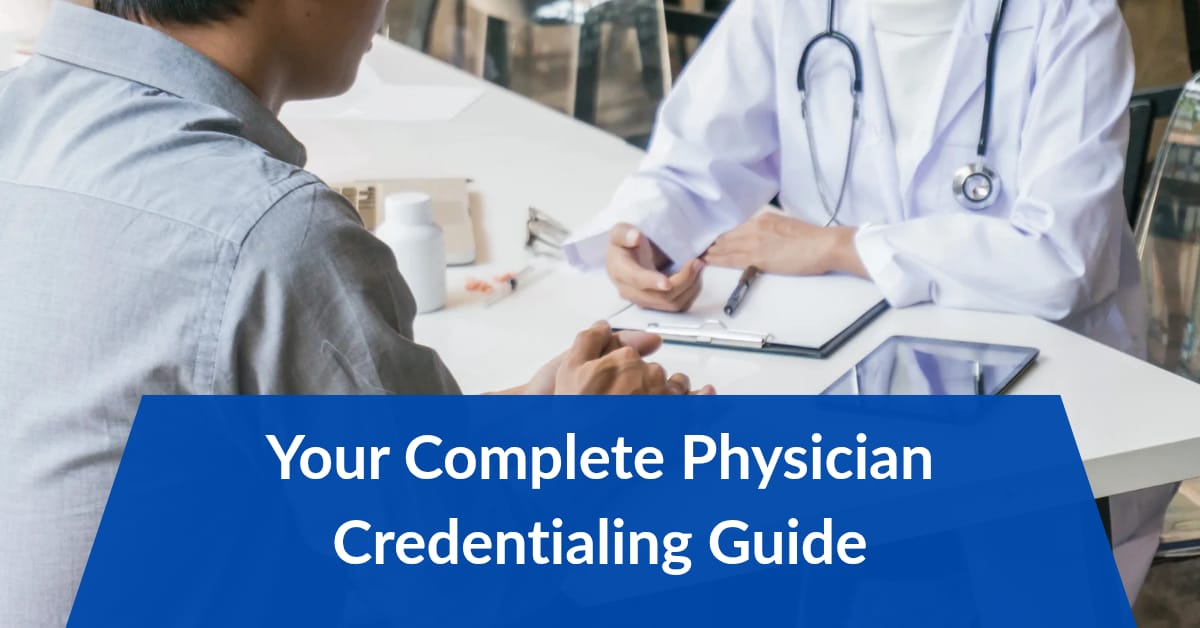
In healthcare, provider credentialing makes sure physicians are qualified to perform medical procedures. It’s critical. Protects the facility. Protects the provider.
But it’s complicated. Time-consuming. Requires submitting tons of documents. Hard to track sometimes. That’s why we created this physician credentialing checklist to help speed things up.
Wait a sec! Before diving in, let’s be clear why this matters.
Following the credentialing process properly optimizes billing and coding workflows. Reduces payment delays. Improves revenue cycle management. Keeps your practice running smoothly.
Physician Credentialing Checklist: Step-by-Step Guide
The US has 50 states. Each has its own rules for healthcare provider credentialing. So, the first step? Check your state laws. Credentialing takes time. A lot of it. Submitting documents, verifications it can take 90–150 days.
If you’re a new provider starting your career, start early. The sooner, the better. Here’s a breakdown of the stages to complete credentialing:
Stage #1 – Pre-Application Submission
Think of this as a background check. It covers:
- Criminal records
- Disciplinary actions
- Board certification
This stage helps the credentialing board filter out unqualified providers. They may request additional documents if any issues pop up. Don’t worry if you’re qualified, no flags. You’ll pass and move on smoothly.
Stage #2 – Application Submission
Now, you submit the official credentialing application. Include all required information and supporting documents. Requirements vary—physician, nurse, provider assistant, or group.
We’ll provide a detailed checklist later in this guide. Keep reading to uncover it. Or skip straight to that section if you prefer.
Stage #3 – Verification of Receipt
After submitting, follow up. Call or email to confirm receipt. The board may request more information. Provide it promptly to avoid delays.
Also, keep copies of your application and all submitted documents. Trust us—it helps.
Credentialing Documents Checklist for New Physicians
If you’re a new physician ready to start practicing, follow this checklist. Essential. No shortcuts.
- ACLS/BLS certification
- Case logs from the last 24 months (if applicable)
- Professional liability insurance certificate or policy page (if applicable)
- Complete work history with all employment affiliations and practice locations
- Locum tenens practice experience form (if applicable)
- Current immunization records and recent TB test results (if available)
- Active state license wallet cards
- Certificates: NRP, ACLS, ATLS, BLS, APLS, or PALS
- Board certificate with issuing board details and certification dates
- State-controlled substance registrations or the federal DEA
- FLEX, NBME, SPEX, or USMLE scores
- NPI confirmation letter and documentation
- Wall certificate with expiration date and number
- CME activity for the past three years
- DEA certificate
- Driver’s license
- Federal tax ID number
- Green card, permanent resident card, or visa for non-US residents
- Hospital privileges documents
- ECFMG certificate info (for foreign graduates)
- Last ten years’ insurance claims report
- Malpractice claims history
- Personal contact details
- Privilege form completed delineation
- Residency diploma
- Recently signed photograph
- Social security card
- Surgical logs
- Third-party documentation for disciplinary/malpractice actions (if applicable)
- Three recommendation letters from healthcare providers who observed you within the last year
- Updated CV with complete chronological professional history
- UPON number
Credentialing Documents Checklist for Advanced Practice Registered Nurses & Physician Assistants
If you’re an APRN or PA, the checklist is similar, with a few differences.
- Ongoing professional practice evaluation
- Case logs from the last 24 months (if applicable)
- Locum tenens practice experience form (if applicable)
- Most recent TB test results and immunization records
- Active state license wallet cards
- College/university diploma and training certificates
- Federal DEA and state-controlled substance registrations
- NPI confirmation letter and documentation
- Wall certificate with expiration date and number
- CME activity for the past three years
- Diploma and transcripts
- Driver’s license
- Federal tax ID number
- Focused professional practice evaluation
- Military discharge record, DD-214 (if applicable)
- Personal contact details
- Practice history with employment affiliations and facility locations
- Privileges form completed delineation
- Recently signed photograph
- Social security card
- Three professional recommendation letters
- Updated CV with complete chronological professional history
Credentialing Documents Needed for a Group Practice
Now that we’ve covered individual providers, PAs, and registered nurses, let’s talk about group practices.
When applying as a group, each physician submits their documents in one application. Each provider must meet the credentialing board’s requirements for the group to be approved.
- Bank letter with branch contact name and phone OR a voided check
- Commercial liability insurance for the group and DME with NSC added
- Hours of operation (Monday–Friday, Saturday/Sunday)
- Articles of incorporation for the group
- IRS letter – CP575
- NPPES registry screenshot showing the group NPI
- Owner’s board certification (if a provider)
- Owner’s DEA license (if a provider)
- Owner’s medical degree certificate (if a provider)
- Owner’s copy of social security card or driver’s license
- Owner’s social security number
- Group start date
- W-9 form with tax ID
Bottom Line
Still feeling overwhelmed? Outsource it. Professionals like MedyraTech handle credentialing for providers, groups, nurses, and PAs.
Outsourcing is smart. Credentialing isn’t continuous. Physicians gain skills, certifications, and need updates to stay qualified. Avoid penalties.
Healthcare facilities also benefit. Staff changes. New physicians require credentialing. Payment delays? Avoided. Time saved. Stress reduced.